
Top Signs You Need Air Duct Cleaning Service – Don’t Ignore These
Most duct cleaning checklists read like a horoscope: dust on the vents, some sneezing, a faint smell. That describes ordinary HVAC operation, which is exactly why so many homeowners read those lists, shrug, and do nothing. The signals that genuinely point to duct-interior contamination are narrower and more mechanical. In this guide we’ll cover the specific, observable signs worth acting on in Tremont, what causes each one, and how to tell a real problem from a maintenance item.
Dust on the Vent Cover vs. Dust on the Wall Below It
Dust gathering on the face of a supply register is usually a filter and static-pressure issue, not proof your ducts are filthy. Air moving across a grille deposits what it’s carrying right there. A dirty filter, an undersized return, or a register blowing straight at a wall will all leave a smear of dust without the duct interior being the culprit. Start by checking and changing the filter before you conclude anything.
The clearer sign is a consistent, fine dust ring on the wall or ceiling directly below or around a register, especially one that reappears soon after you wipe it away. That pattern means particulate is being discharged from the duct itself and settling in a fixed footprint. Position matters: a ring under one hard-working supply in Tremont, or a streak where a boot meets drywall, tells you more than scattered dust on every grille in the house.
- Low-priority: uniform dust on the vent face, cleared by better filtration.
- Worth a look: dust concentrated on one or two registers.
- Real signal: a repeating ring or streak on the surface below a register.
- Escalate: visible dark growth or staining at the supply boot itself.
Uneven Airflow Between Rooms
If one room struggles to keep up while another gets blasted, accumulated debris in the branch duct serving the weaker room is a common cause. Before you blame the ducts, rule out the simple stuff: a closed damper, a blocked register, a return path that’s too small. But when airflow has faded gradually over years across specific rooms and the equipment checks out, restriction inside the duct run is a measurable suspect.
Pay attention to where the imbalance sits. Supply boots that feel weak while the trunk feels strong point toward the branch. In Tremont, older homes with long, low-clearance runs and a couple of late additions are where we see this most often: the added room’s duct was tucked in with little margin, so any buildup narrows it further. A professional scope can confirm whether the run is restricted or simply undersized before anyone commits to a fix.
Renovation Debris: The Cleaning Trigger Most People Miss
Post-renovation is the one situation where you clean on principle, not on symptoms. Drywall dust is ultra-fine and gets pulled straight into the return while sanding and cutting are underway. Inside a duct, it doesn’t settle out and disappear the way heavier dirt might. It clings to duct walls, coats the blower and coil, and steadily raises the resistance the system has to push against.
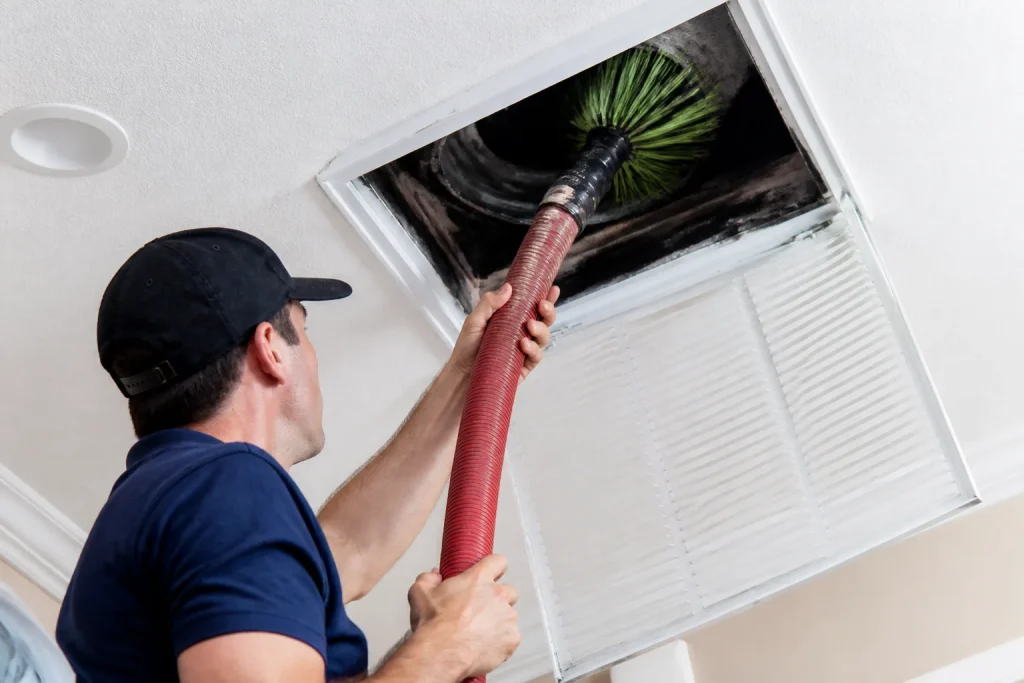
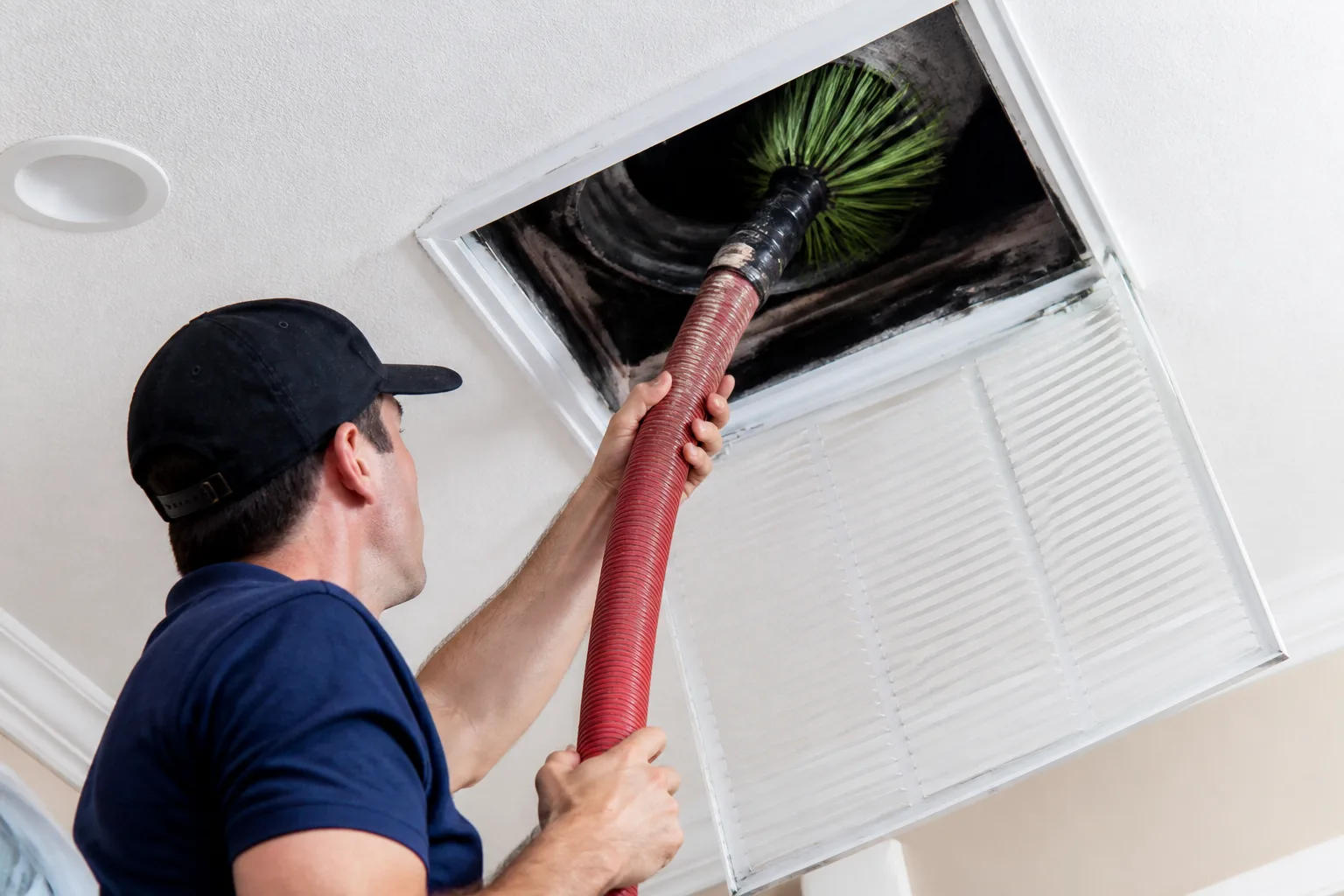
Left alone, that layer keeps the blower working harder to move the same air. In our experience, systems that had a major remodel and no follow-up cleaning tend to run longer to hit setpoint long after the project is finished. If you’ve had drywall work, tiling, or a full gut renovation in a Tremont home, treat the ducts as part of the cleanup, not the last thing on the punch list. This is where professional-grade gear earns its keep: Rotobrush and Nikro systems agitate the duct wall mechanically and extract what loosens, rather than stirring fine dust into the room with a shop-vac.
Rodent Evidence: The Sign That Overrides Everything Else
Most ducts can wait three to five years between cleanings if everything else is fine. Rodent activity is the exception. Droppings in a register boot, shredded nesting material near a supply, or a musky, ammonia-tinged smell that gets stronger when the heat or AC kicks on are all reasons to act now rather than on a schedule. The smell intensifies with airflow because the air is passing directly over the contamination.
Look and smell for:
- Small dark droppings or seed husks inside register boots or on the grille.
- Chewed insulation or nesting material at a supply opening.
- A sharp, musty, urine-like odor strongest right after the system starts.
- Tracks or greasy rub marks along duct seams you can reach.
Rodent debris carries genuine health risk, so this is not a “clean it when convenient” situation. When abatement matters, we bring Abatement Technologies air filtration equipment to control airborne particulate during the work, the same standard used in professional remediation. Call Air Duct Cleaning Tremont if you find any of these signs.
Runtime Creep and Efficiency Loss
A system that used to reach setpoint quickly and now runs noticeably longer is telling you something. Duct restriction from years of accumulated debris is one measurable contributor: higher static pressure means the blower moves less air per minute, so the equipment stays on longer to do the same job. You won’t see this on a stat line, but you’ll notice it on your comfort and your energy use.
Confirm the pattern before assuming it’s the ducts. If runtime has crept up gradually, the filter is clean, and the equipment itself has checked out, an inspection of the duct interior is the logical next step. In Tremont’s older housing stock, where a lot of air pathways were never designed with much spare capacity, that gradual clog has an outsized effect. Pairing HVAC cleaning with duct work addresses the whole pathway at once.
Humidity, Odor Windows, and What Mold Actually Smells Like
Tremont’s seasonal humidity creates specific windows when mold risk climbs: damp spring stretches and any period of high indoor humidity that lets moisture sit on cool duct surfaces. That’s when early odor indicators show up. Normal dust has a flat, dusty, “attic” smell. Microbial growth smells different: earthy, musty, sometimes like wet basement, and it tends to spike when the system first starts rather than fading.
Catching it early matters, because treating odor is different from removing debris. Sanitizing addresses microbial growth inside the system rather than masking it with fragrance. We integrate Honeywell and Aprilaire products so the system can be cleaned and supported with trusted air quality solutions in a single visit. If you’re chasing a smell that keeps returning in a Tremont home, air duct cleaning plus an air quality step is where to start.
When to Call a Pro
Check the filter first, then look at the wall below your registers, the air balance between rooms, any recent renovation, and any sign of rodents. If two or more of the real signals above show up, a professional inspection saves you guessing. Safety note: never reach into a duct or pull a register to inspect wiring or combustion components yourself – leave that to a trained technician. And don’t forget the dryer: dryer vent cleaning is its own inspection.
Related services in Tremont: we also handle duct repair and sealing so contaminants stay out after cleanup – we seal what we clean.
The Bottom Line
The signs worth acting on are specific: a repeating dust ring below a register, airflow that faded in certain rooms, a recent renovation, rodent evidence, a system running longer than it used to, and a musty odor that spikes on startup. Surface dust and a smell after burning toast don’t count. The best way to know is a scope of the duct interior and a plain answer about what’s actually inside – professional-grade equipment, not improvised tools.
If you’re in Tremont and need help, Air Duct Cleaning Tremont offers free estimates – call (833) 468-5768 for a free estimate. We answer 24/7. Fast dispatch from 7am to 7pm, Sunday through Friday.
Frequently Asked Questions
Normal dust sits on the vent face and clears up with better filtration, while a problem shows as dust returning in the same spot below a register, fading airflow in certain rooms, or a musty smell on startup. If you see those patterns, it’s worth an inspection. Call (833) 468-5768 for a free estimate.
Yes, post-renovation is a cleaning trigger even without symptoms, because ultra-fine drywall dust coats duct walls and the blower and raises system resistance over time. It doesn’t settle out on its own.
It can be. Duct restriction from years of buildup raises static pressure, so the blower moves less air and the system runs longer. Confirm the filter is clean and the equipment checks out, then inspect the duct interior.
Yes, and it overrides the usual cleaning timeline. Droppings, nesting material, or a sharp ammonia-like smell that strengthens on startup mean you should act now rather than on a schedule. Call (833) 468-5768 for a free estimate.
Written by the team at Air Duct Cleaning Tremont.
Need Air Duct Cleaning Help?
Call Air Duct Cleaning Tremont - the local pro we connect you with is licensed and insured, with free written estimates in Tremont.
(833) 468-5768